

The Reconstruction Of Religious Thought In Islam With Notes And Refrerences Sir Muhammad Iqbal Adam Publisheers English (Hb)
Original price was: ₹425.00.₹320.00Current price is: ₹320.00.
- Key Themes and Intellectual Contributions
- ✅ Religious Experience as Epistemology
- Iqbal begins by asserting that religious experience is a legitimate source of knowledge, not inferior to reason or empirical observation. He argues that:
- Revelation is not irrational, but supra-rational
- The Qur’an encourages reflection and inquiry
- Sufism, when properly understood, refines the inner faculties of perception
- This sets the tone for a dynamic and experiential understanding of Islam, rooted in both heart and intellect.
- ✅ God and Prayer: A Living Relationship
- In his third lecture, Iqbal redefines God not as a static metaphysical entity, but as the Ultimate Ego—a Being who interacts with creation. Prayer, then, becomes:
- A dialogue between finite and Infinite
- A means of spiritual empowerment and moral clarity
- A way to actualize divine attributes within the self
- Iqbal’s conception of God is deeply Qur’anic yet philosophically robust, challenging both pantheism and deism.
- ✅ The Human Ego and Immortality
- Iqbal’s fourth lecture is a masterclass in Islamic psychology and metaphysics. He presents the human ego as:
- A unique, evolving self
- Capable of freedom, creativity, and moral choice
- Destined for immortality through spiritual growth
The Reconstruction Of Religious Thought In Islam With Notes And Refrerences Sir Muhammad Iqbal Adam Publisheers English (Hb)

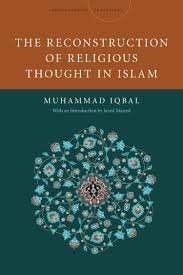
📘 The Reconstruction of Religious Thought in Islam – A Visionary Manifesto for Islamic Intellectual Revival
The Reconstruction of Religious Thought in Islam is not merely a book—it is a philosophical call to action. Authored by Sir Muhammad Iqbal (1877–1938), the poet-philosopher of the East, this work is a collection of seven groundbreaking lectures delivered between 1928 and 1932 in Madras, Hyderabad, and Aligarh. In these lectures, Iqbal reimagines the foundations of Islamic thought in light of modern philosophy, science, and spiritual experience.
Published in a durable hardcover edition by Adam Publishers, this volume includes notes and references, making it ideal for scholars, students, and seekers who wish to engage deeply with Iqbal’s intellectual legacy.
🖋️ About the Author: Sir Muhammad Iqbal
Iqbal was a polymath—poet, philosopher, barrister, and visionary. He is revered as:
The spiritual father of Pakistan
A reviver of Islamic philosophical tradition
A bridge between classical metaphysics and modern rationalism
His poetry in Urdu and Persian is celebrated for its emotional intensity, but his prose—especially in Reconstruction—reveals his rigorous intellect and reformist zeal. Iqbal’s goal was to awaken the Muslim mind, urging it to reclaim its creative spirit and engage with the modern world without losing its spiritual essence.
📖 Structure and Chapter Overview
The book comprises seven lectures, each addressing a core dimension of Islamic thought:
Knowledge and Religious Experience
The Philosophical Test of the Revelations of Religious Experience
The Conception of God and the Meaning of Prayer
The Human Ego – His Freedom and Immortality
The Spirit of Muslim Culture
The Principle of Movement in the Structure of Islam
Is Religion Possible? (added in the 1934 Oxford edition)
Each lecture is supported by footnotes and scholarly references, drawing from Qur’anic verses, Hadith, classical Islamic scholars (like Ghazali, Ibn Sina, Rumi), and Western philosophers (like Kant, Bergson, Nietzsche).
🌿 Key Themes and Intellectual Contributions
✅ Religious Experience as Epistemology
Iqbal begins by asserting that religious experience is a legitimate source of knowledge, not inferior to reason or empirical observation. He argues that:
Revelation is not irrational, but supra-rational
The Qur’an encourages reflection and inquiry
Sufism, when properly understood, refines the inner faculties of perception
This sets the tone for a dynamic and experiential understanding of Islam, rooted in both heart and intellect.
✅ God and Prayer: A Living Relationship
In his third lecture, Iqbal redefines God not as a static metaphysical entity, but as the Ultimate Ego—a Being who interacts with creation. Prayer, then, becomes:
A dialogue between finite and Infinite
A means of spiritual empowerment and moral clarity
A way to actualize divine attributes within the self
Iqbal’s conception of God is deeply Qur’anic yet philosophically robust, challenging both pantheism and deism.
✅ The Human Ego and Immortality
Iqbal’s fourth lecture is a masterclass in Islamic psychology and metaphysics. He presents the human ego as:
A unique, evolving self
Capable of freedom, creativity, and moral choice
Destined for immortality through spiritual growth
He critiques deterministic philosophies and calls for a reaffirmation of human dignity, aligning with Qur’anic verses like “We have honored the children of Adam…” (17:70).
✅ Muslim Culture and the Principle of Movement
Iqbal’s fifth and sixth lectures are a blueprint for civilizational renewal. He argues that:
Islamic culture is rooted in Tawhid (unity)
The Qur’an promotes ijtihad (independent reasoning)
Shari‘ah must evolve with changing contexts, guided by maqasid (objectives)
He famously declares:
“The ultimate spiritual basis of all life, as conceived by Islam, is eternal and reveals itself in variety and change.”
This makes Iqbal a precursor to modern Islamic reformers, advocating for a living, breathing jurisprudence.
✅ Is Religion Possible?
In the final lecture, Iqbal addresses the modern skeptic, asking whether religion can survive in an age of science and secularism. His answer is a resounding yes—if religion:
Embraces intellectual humility
Engages with scientific discoveries
Offers a moral compass and spiritual depth that science alone cannot provide
He concludes with a vision of Islam as a creative force, capable of guiding humanity toward justice, beauty, and transcendence.
🎨 Language and Style
Iqbal’s prose is:
Dense and philosophical, yet poetic in tone
Rich in metaphor, drawing from nature, scripture, and classical literature
Interdisciplinary, weaving together theology, psychology, sociology, and metaphysics
This edition by Adam Publishers includes editorial notes and references, helping readers navigate Iqbal’s complex ideas with clarity and context.
Related Products

- Bin Roye Ansu ( Farhat Ishtiyaq ) Ilmo Irfan Urdu
1 in stock
- Hardcover
- Publisher: Al-Hasanat; 1 edition (2016)
1 in stock
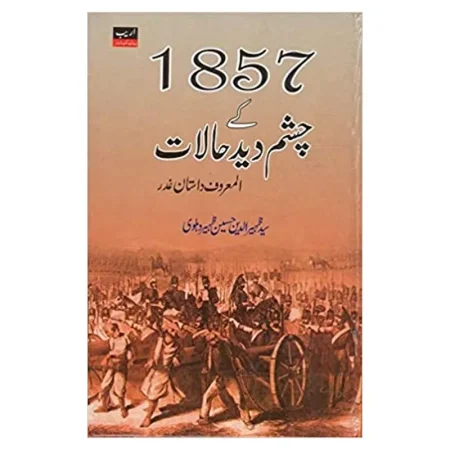
- 1857 Isvi Ke Chashmdeed Halat ( Maroof Dastane Gadar)
3 in stock
1 in stock

- A Brief Illustrated Guide To Understanding Islam I. A. Ibrahim Goodword (English)
1 in stock

- Paperback
- Publisher: Goodword Books
- Language: English
1 in stock


- A Gift For Muslim Bride & Groom Idara (English)
7 in stock

- Parents : Islamic Rights & Responsibilities
1 in stock

- Paperback
- Publisher: Idara Impex (2006)
1 in stock
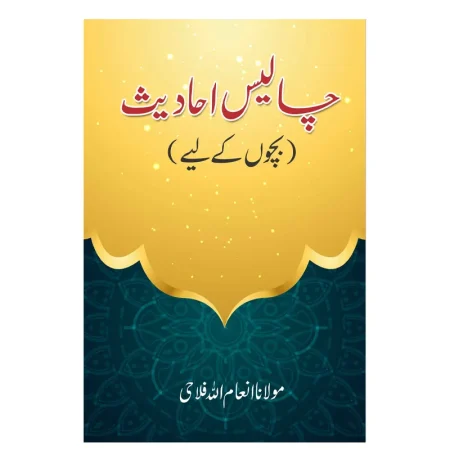
- Chalees Ahadees : Bachchon Ke Liye ( Maulana Inamullah Falahi ) Mmi Urdu
1 in stock
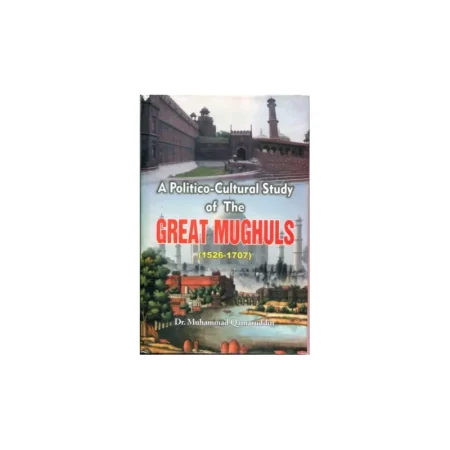
- A Politico-Cultural Study Of The Great Mughuls (1526-1707) Dr. Muhammad Qamaruddin Adam Publishers (English)
1 in stock