
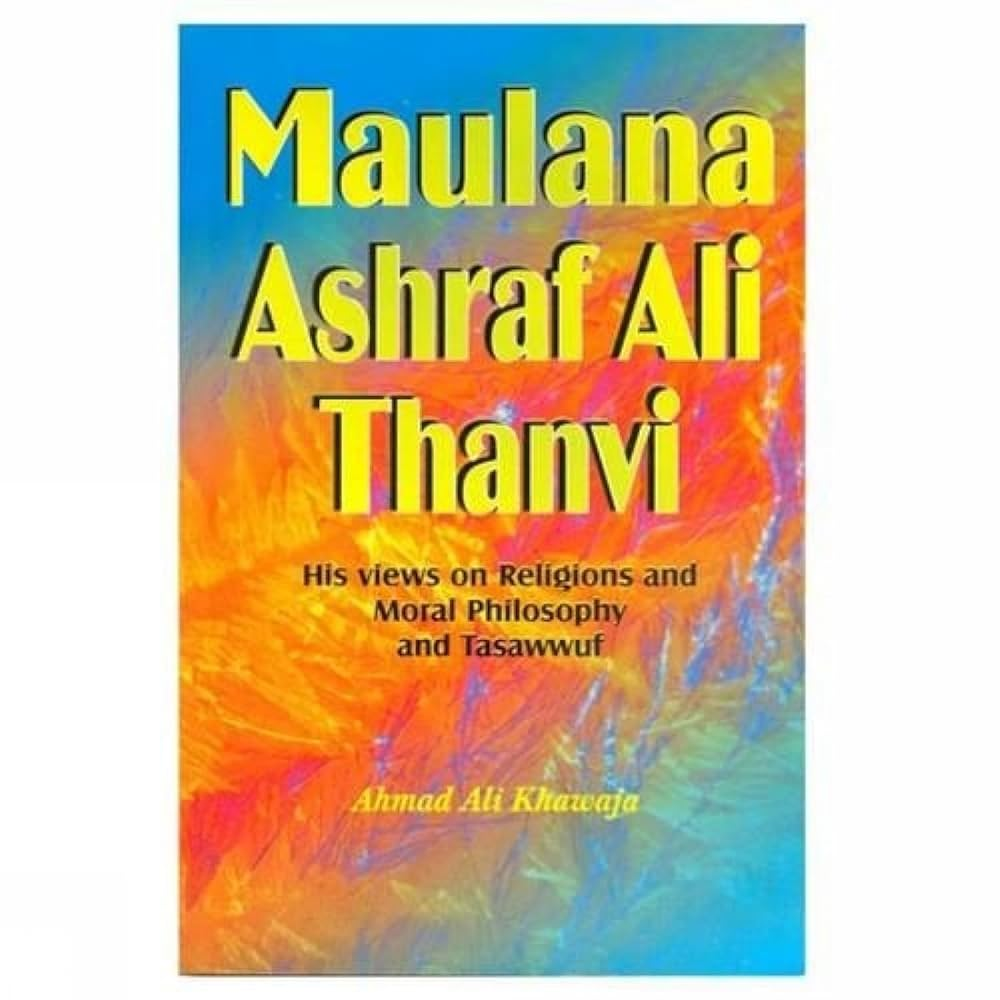
Maulana Ashraf Ali Thanvi His View On Moral Philosophy And Tasawwuf By Ahmed Ali Khawaja Adam Publishers English

Original price was: ₹195.00.₹160.00Current price is: ₹160.00.
- For Islamic Studies Programs:
- Ideal for courses on Islamic ethics, spirituality, and comparative philosophy.
- Can be paired with texts by Al-Ghazali, Ibn Qayyim, and Shah Waliullah for deeper study.
- For Families & Youth:
- Offers a framework for character education rooted in faith.
- Can be adapted into discussion guides for parenting workshops or youth halaqas.
- For Community Leaders:
- Provides a blueprint for ethical leadership and spiritual mentorship.
- Encourages integration of Tasawwuf into everyday decision-making and conflict resolution.
- 🎁 Gifting & Bundling Ideas
- This book makes a thoughtful gift for:
- Students of Islamic philosophy and Tasawwuf.
- Educators and madrasa instructors.
- Spiritual seekers and new Muslims.
Maulana Ashraf Ali Thanvi His View On Moral Philosophy And Tasawwuf By Ahmed Ali Khawaja Adam Publishers English

📘 Maulana Ashraf Ali Thanvi: His Views on Moral Philosophy and Tasawwuf
Author: Prof. Ahmed Ali Khawaja
Publisher: Adam Publishers & Distributors
Language: English
Pages: ~108
Subject: Islamic Ethics, Tasawwuf, Moral Philosophy
Audience: Students of Islamic thought, educators, seekers of spiritual refinement
🌟 Purpose & Vision
This book is a scholarly yet accessible exploration of Maulana Ashraf Ali Thanvi’s intellectual contributions to Islamic moral philosophy and spiritual psychology (Tasawwuf). It aims to present Thanvi not merely as a jurist or reformer, but as a profound ethical thinker whose views on human behavior, inner purification, and divine proximity remain timeless and deeply relevant.
Prof. Khawaja’s work serves as a bridge between classical Islamic scholarship and modern philosophical inquiry, making it ideal for readers seeking a structured understanding of Islamic ethics rooted in spirituality.
🧠 Core Themes & Structure
The book is divided into thematic chapters that reflect Thanvi’s integrated approach to ethics and spirituality. Each section draws from his vast corpus—especially Bihishti Zewar, Taaleem-ud-Deen, and his Malfoozat (spiritual discourses).
1. Foundations of Islamic Moral Philosophy
Thanvi’s ethics are grounded in the Qur’an and Sunnah, not abstract speculation.
He views morality as a divine trust (Amanah)—a means to fulfill one’s purpose as Allah’s servant.
Rejects secular moral relativism in favor of objective, revelation-based values.
2. Role of the Nafs (Self)
Thanvi identifies the nafs as the root of moral struggle.
Categorizes the self into stages: Nafs-e-Ammarah (commanding evil), Nafs-e-Lawwama (self-reproaching), and Nafs-e-Mutmainna (contented soul).
Moral development is seen as a journey from base desires to spiritual serenity.
3. Tazkiyah (Purification of the Heart)
Central to Thanvi’s moral philosophy is Tazkiyah—the cleansing of spiritual diseases like pride, envy, and greed.
Emphasizes practical methods: muraqabah (meditative reflection), muhasabah (self-accountability), and suhbah (companionship of the righteous).
Encourages daily introspection and sincere repentance as tools for growth.
4. Tasawwuf as Applied Ethics
Thanvi’s Tasawwuf is not mystical escapism—it’s ethical realism.
He redefines Sufism as a disciplined path of moral refinement, deeply rooted in Shariah.
Rejects innovations and excesses, advocating for a balanced, Sunnah-based spirituality.
5. Social Ethics & Community Engagement
Stresses the importance of good character (akhlaq) in social interactions.
Encourages humility, truthfulness, patience, and generosity as pillars of communal harmony.
Views moral conduct as a form of da’wah—inviting others to Islam through behavior.
6. Thanvi’s Critique of Western Moral Thought
Prof. Khawaja highlights Thanvi’s engagement with Western philosophy, especially its ethical theories.
Thanvi critiques utilitarianism, existentialism, and secular humanism for lacking spiritual depth.
Argues that without divine accountability, morality becomes subjective and unstable.
✍️ Literary Style & Accessibility
Academic yet readable: Prof. Khawaja’s prose is clear, making complex ideas accessible to students and lay readers.
Contextual analysis: Each concept is explained with references to Thanvi’s writings and classical Islamic sources.
Comparative tone: The book often contrasts Islamic ethics with Western thought, enriching the reader’s perspective.
🎓 Educational Applications
For Islamic Studies Programs:
Ideal for courses on Islamic ethics, spirituality, and comparative philosophy.
Can be paired with texts by Al-Ghazali, Ibn Qayyim, and Shah Waliullah for deeper study.
For Families & Youth:
Offers a framework for character education rooted in faith.
Can be adapted into discussion guides for parenting workshops or youth halaqas.
For Community Leaders:
Provides a blueprint for ethical leadership and spiritual mentorship.
Encourages integration of Tasawwuf into everyday decision-making and conflict resolution.
🎁 Gifting & Bundling Ideas
This book makes a thoughtful gift for:
Students of Islamic philosophy and Tasawwuf.
Educators and madrasa instructors.
Spiritual seekers and new Muslims.
Related Products

- A Gift For Muslim Bride & Groom Idara (English)
7 in stock

- A Brief Illustrated Guide To Understanding Islam I. A. Ibrahim Goodword (English)
1 in stock

- Publisher: Islamic Book Service (2014)
4 in stock

- Parents : Islamic Rights & Responsibilities
1 in stock

- 16 Surah Shareef Ibs Arabic/Urdu
1 in stock

- Hardcover
- Publisher:?Al-Hasanat; 1 edition (2014)
1 in stock

- 40 Daily Prayers (Ibs) English/Arabic
2 in stock

1 in stock

1 in stock

- Paperback
- Publisher: Idara impex (2006)
- Language: English
14 in stock

- Hardcover
- Publisher: Al-Hasanat; 1 edition (2016)
1 in stock

- Paperback
- Publisher: Goodword Books
- Language: English
1 in stock