In The Early Hours Khurram Murad Manshurat English

Original price was: ₹200.00.₹140.00Current price is: ₹140.00.
- The Path of Self-Development
- Murad’s reflections are structured around seven key nasiha (pieces of advice), each addressing a facet of spiritual growth:
- 1. The Goal of Life
- The believer’s ultimate aim is the pleasure of Allah and entry into Jannah. Murad critiques worldly distractions and reorients the reader toward eternal values. He calls for a life of purpose, where every action is weighed against its spiritual consequence.
- 2. The Role of the Qur’an
- The Qur’an is not just a book to be recited—it is a manual for transformation. Murad encourages deep engagement with its meanings, urging readers to internalize its guidance and let it shape their character. He highlights verses like:
- “Indeed, this Qur’an guides to that which is most upright…” (Surah Al-Isra 17:9)
- 3. The Importance of Salah
In The Early Hours Khurram Murad Manshurat English

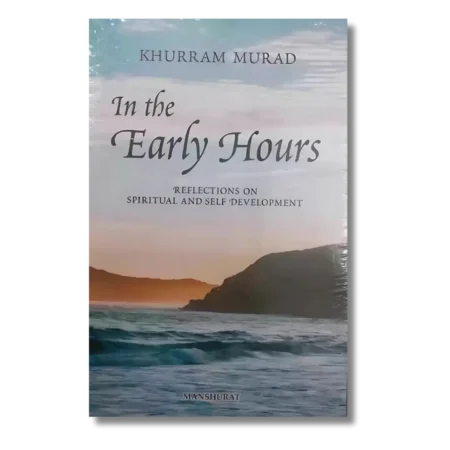
🌙 In The Early Hours by Khurram Murad – A 1000-Word Explanation
🕊️ Introduction: A Spiritual Awakening Before Dawn
Khurram Murad’s In The Early Hours is not merely a book—it’s a soulful invitation to rediscover the sacred silence of pre-dawn hours. Written as a series of reflections originally delivered after Fajr prayers, it offers a roadmap for spiritual and personal development rooted in Islamic tradition. The title itself evokes the serenity of Tahajjud time, when the veil between the soul and its Creator feels thinnest.
Murad’s work is especially poignant for young Muslims, seekers, and those yearning for a deeper connection with Allah. His tone is gentle yet purposeful, guiding readers toward a life of intentional worship, ethical living, and inner transformation.
🌌 The Power of the Early Hours
Murad begins by emphasizing the spiritual potency of the last third of the night. Drawing from Hadith, he reminds us that Allah descends to the lowest heaven during this time, asking:
“Is anyone praying that I may answer him? Is anyone seeking forgiveness, that I may forgive him?” (Tirmidhi)
This sacred window is not just for ritual—it’s for renewal. Murad urges believers to reclaim these hours for introspection, Qur’anic reflection, and heartfelt dua. In a world of constant noise, the early hours offer divine stillness.
🛤️ The Path of Self-Development
Murad’s reflections are structured around seven key nasiha (pieces of advice), each addressing a facet of spiritual growth:
1. The Goal of Life
The believer’s ultimate aim is the pleasure of Allah and entry into Jannah. Murad critiques worldly distractions and reorients the reader toward eternal values. He calls for a life of purpose, where every action is weighed against its spiritual consequence.
2. The Role of the Qur’an
The Qur’an is not just a book to be recited—it is a manual for transformation. Murad encourages deep engagement with its meanings, urging readers to internalize its guidance and let it shape their character. He highlights verses like:
“Indeed, this Qur’an guides to that which is most upright…” (Surah Al-Isra 17:9)
3. The Importance of Salah
Prayer is the heartbeat of a believer’s day. Murad elevates Salah from ritual to relationship—a moment of intimate dialogue with Allah. He especially emphasizes the night prayer (Tahajjud) as a tool for spiritual elevation and emotional healing.
4. Controlling the Nafs (Self)
Murad delves into the inner battle between the ego and the soul. He identifies pride, anger, and heedlessness as barriers to spiritual growth. Through self-discipline, dhikr, and humility, one can tame the nafs and align with divine will.
5. The Role of the Prophet ﷺ
The Prophet Muhammad ﷺ is presented not just as a historical figure, but as a living example. Murad urges readers to study his life, emulate his character, and embody his mercy, patience, and justice in daily interactions.
6. Brotherhood and Community
Islam is not a solitary path. Murad stresses the importance of sincere companionship, mutual support, and collective worship. He warns against isolation and encourages believers to uplift one another in faith.
7. Living for the Akhirah
The final nasiha is a call to live with the Hereafter in mind. Murad reminds us that this world is fleeting, and true success lies in preparing for the eternal abode. He quotes:
“Every soul shall taste death…” (Surah Al-Imran 3:185)
📚 Literary Style and Emotional Impact
Murad’s prose is simple yet profound. He blends Qur’anic verses, Hadith, and personal anecdotes with poetic clarity. His writing is emotionally resonant, often evoking a sense of longing, hope, and spiritual urgency. For readers of Urdu satire and Sufi metaphysics, his tone echoes the introspective depth of Iqbal and the moral clarity of Akbar Allahabadi.
Related Products
- A Politico-Cultural Study Of The Great Mughuls (1526-1707) Dr. Muhammad Qamaruddin Adam Publishers (English)
1 in stock
- Hardcover
- Publisher: Unknown (January 1, 2013)
- Language: English
15 in stock

- Bin Roye Ansu ( Farhat Ishtiyaq ) Ilmo Irfan Urdu
1 in stock
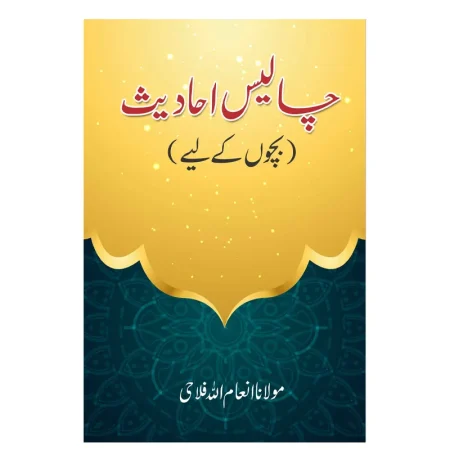
- Chalees Ahadees : Bachchon Ke Liye ( Maulana Inamullah Falahi ) Mmi Urdu
1 in stock

- A Brief Illustrated Guide To Understanding Islam I. A. Ibrahim Goodword (English)
1 in stock
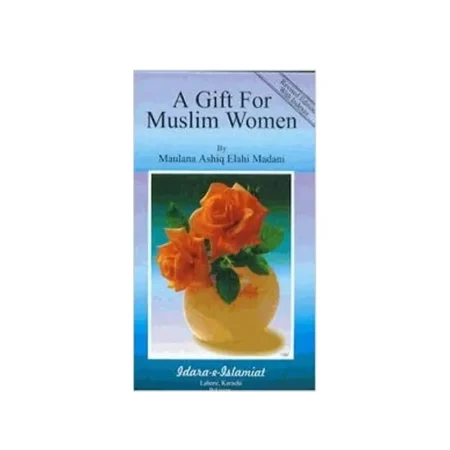
- A Gift For Muslim Women Maulana Ashiq Iilahi Madani Idara (English)
9 in stock

1 in stock
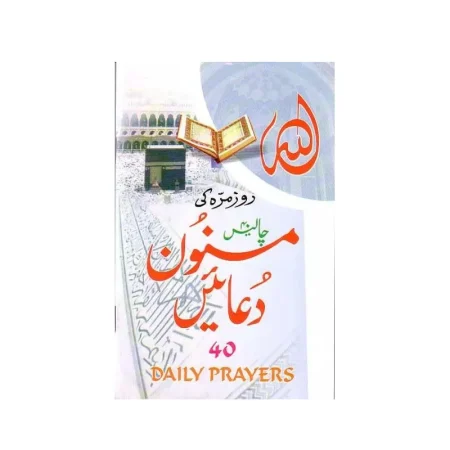
- 40 Daily Prayers (Ibs) English/Arabic
2 in stock
- Publisher: Islamic Book Service (2014)
4 in stock
- Title: Aap Umrah Kaise Karen?
- Publisher: Islamic Book Services
47 in stock