

Haath Paaun Choomne Aur Qayam E Tazimi Ki Sharai Hasiyat By Maulana Mohd Ruhullah Naqshbandi (Al Hasanat) Urdu (Hb)


Original price was: ₹120.00.₹95.00Current price is: ₹95.00.
- 📖 Core Themes of the Book
- The book revolves around two key practices often seen in South Asian and other Muslim cultures:
- 1. Haath Paaun Choomna (Kissing Hands and Feet)
- This gesture is often associated with:
- Showing respect to elders, scholars, or spiritual guides
- Expressing humility and devotion
- Maulana Ruhullah explores:
- Instances from Hadith where companions kissed the Prophet ﷺ’s hands or feet
- The difference between permissible reverence and exaggerated veneration
- Scholarly opinions from Hanafi, Shafi‘i, and Hanbali schools
- The role of niyyah (intention) in determining the ruling
- He concludes that while kissing hands out of respect may be permissible in certain contexts, kissing feet or doing so habitually can border on ghuluw (excess) and must be approached with caution.
- 2. Qayam-e-Tazimi (Standing in Honor)
- This refers to:
- Standing up when someone enters the room
- Remaining standing as a sign of respect or awe
- The author examines:
- The Hadith where the Prophet ﷺ discouraged standing for others as a form of glorification
- The practice of standing for the Prophet ﷺ during Mawlid gatherings
- The difference between standing out of love vs. standing out of ritualized reverence
- Views of classical scholars like Imam Nawawi, Ibn Hajar, and Shah Waliullah
- He emphasizes that standing out of adab and love is not inherently haram, but it must not resemble acts of worship or elevate a person beyond their human status.
Haath Paaun Choomne Aur Qayam E Tazimi Ki Sharai Hasiyat By Maulana Mohd Ruhullah Naqshbandi (Al Hasanat) Urdu (Hb)

Haath Paaun Choomne Aur Qayam-e-Tazimi Ki Sharai Hasiyat – A Scholarly Discourse on Reverence and Boundaries
In a world where cultural gestures often blur into religious practice, the question of what constitutes permissible reverence in Islam becomes essential. The book “Haath Paaun Choomne Aur Qayam-e-Tazimi Ki Sharai Hasiyat” (The Shari‘ah Status of Kissing Hands/Feet and Standing in Respect) by Maulana Muhammad Ruhullah Naqshbandi offers a deeply researched, balanced, and accessible Urdu analysis of these practices from the lens of Islamic jurisprudence.
Published by Al Hasanat, this hardcover edition is ideal for scholars, students, and everyday Muslims seeking clarity on matters of adab (etiquette), ibadah (worship), and bid‘ah (innovation).
🖋️ About the Author: Maulana Muhammad Ruhullah Naqshbandi
A respected scholar rooted in the Naqshbandi Sufi tradition, Maulana Ruhullah combines classical fiqh with spiritual insight. His writing reflects:
Deep familiarity with Qur’an and Hadith
Nuanced understanding of cultural practices
A commitment to preserving Sunnah while respecting genuine expressions of love and humility
His tone is scholarly yet pastoral—guiding readers without harshness, and offering clarity without condemnation.
📖 Core Themes of the Book
The book revolves around two key practices often seen in South Asian and other Muslim cultures:
1. Haath Paaun Choomna (Kissing Hands and Feet)
This gesture is often associated with:
Showing respect to elders, scholars, or spiritual guides
Expressing humility and devotion
Maulana Ruhullah explores:
Instances from Hadith where companions kissed the Prophet ﷺ’s hands or feet
The difference between permissible reverence and exaggerated veneration
Scholarly opinions from Hanafi, Shafi‘i, and Hanbali schools
The role of niyyah (intention) in determining the ruling
He concludes that while kissing hands out of respect may be permissible in certain contexts, kissing feet or doing so habitually can border on ghuluw (excess) and must be approached with caution.
2. Qayam-e-Tazimi (Standing in Honor)
This refers to:
Standing up when someone enters the room
Remaining standing as a sign of respect or awe
The author examines:
The Hadith where the Prophet ﷺ discouraged standing for others as a form of glorification
The practice of standing for the Prophet ﷺ during Mawlid gatherings
The difference between standing out of love vs. standing out of ritualized reverence
Views of classical scholars like Imam Nawawi, Ibn Hajar, and Shah Waliullah
He emphasizes that standing out of adab and love is not inherently haram, but it must not resemble acts of worship or elevate a person beyond their human status.
🧠 Educational and Spiritual Value
This book is not just a legal treatise—it’s a spiritual guide. It helps readers:
Distinguish between cultural etiquette and religious obligations
Avoid falling into bid‘ah while preserving respectful conduct
Understand the boundaries of reverence in light of Tawheed
Appreciate the Prophetic model of humility and balance
It’s ideal for:
Madrasah students and teachers
Sufi circles and spiritual seekers
Families navigating intergenerational etiquette
Community leaders addressing cultural practices
📐 Format and Presentation
Published by Al Hasanat Pvt. Ltd., this edition features:
Hardcover binding for durability and elegance
High-quality Urdu typesetting for readability
144 pages of structured content with footnotes and references
Compact dimensions (approx. 10 × 10 × 15 cm), making it easy to carry and gift
Related Products
- Hardcover
- Publisher: Unknown (January 1, 2013)
- Language: English
15 in stock

- Hardcover
- Publisher:?Al-Hasanat; 1 edition (2014)
1 in stock
1 in stock


- Paperback
- Publisher: Idara Impex (2006)
1 in stock
- Hardcover
- Publisher: Idara Impex (2014)
- Language: English
8 in stock

- A Brief Illustrated Guide To Understanding Islam I. A. Ibrahim Goodword (English)
1 in stock
1 in stock
- 26 Chabbis Suraten Mohd Yunus Ibn Hazrat Maulana Mohd Umar Sahab Palanpuri Ra) Farid Arabic/Urdu
24 in stock
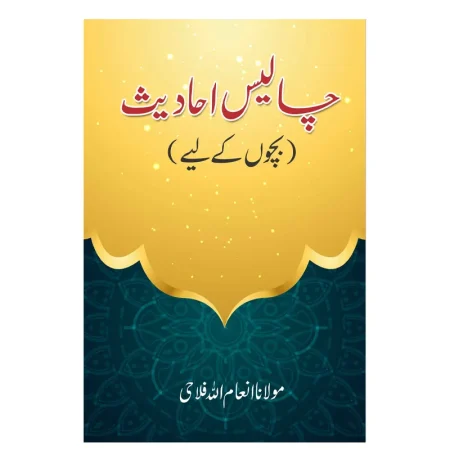
- Chalees Ahadees : Bachchon Ke Liye ( Maulana Inamullah Falahi ) Mmi Urdu
1 in stock
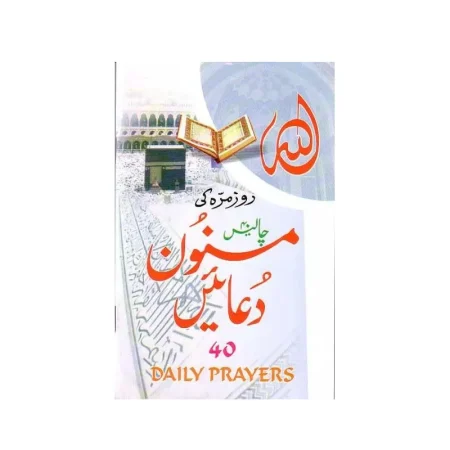
- 40 Daily Prayers (Ibs) English/Arabic
2 in stock